Tag Archives: finance

Deficit streak ends: Obama sees first monthly surplus – Washington Times

8 May

Deficit streak ends: Obama sees first monthly surplus – Washington Times.

Image

11 Money-Saving Strategies (via cnbc.com)

4 May

11 Money-Saving Strategies (via cnbc.com)

11 Money-Saving Strategies
In challenging economic times, people look for different ways to save money and clean up their finances. It pays to educate yourself so that you can make informed decisions about budgeting, investing and other aspects of your finances. While the biggest savings come from limiting your spending to the cash in your wallet, the trick is to set reasonable goals.

Simple steps, such as paying off your credit card balance each month to increasing your contribution to your retirement account, are attainable and worthwhile goals. A good approach is to start with a few things that are so easy to fix that you’ll stick with the program.

Another way to save is to take a second look at big-ticket items, such as insurance. For example, switching from whole life to term will save money and increase cash flow.

You may be surprised how quickly these changes can add up to real money in your pocket.

Read on for more money-saving ideas that can improve your financial position in the months and years to come.

Link

10 Things You Must Know Social Security Insurance was established in 1935 as a financial safety net for older Americans. Eight decades later, all Americans pay into the system, with Social Security the largest source of income for citizens age 65 and older. During 2012, nearly 160 million workers will continue to have 4.2 percent of their pay deposited into the Social Security Trust Fund instead of the usual 6.2 percent, according to a statement from the IRS based on the Temporary Payroll Tax Cut Continuation Act of 2011. The program is based on contributions that workers make into the system. While you’re employed, you pay into Social Security; when it’s your turn to retire you receive benefits. You can start your Social Security retirement benefits as early as age 62 or as late as age 70 (if you were born in 1960 or later, your full retirement age is 67). Your monthly benefit amount will be different depending on the age you start receiving it. The amount of money you receive from Social Security is based on a number of factors, including how much income you earned throughout your working years, the year you were born, and the age at which you file for benefits. If you claim Social Security early, your benefits will be reduced by a fraction of a percent for each month before your full retirement age. Even if you’re not approaching retirement, whatever your age, or income, Social Security is a part of life that impacts us all. Staying aware of the changes in this important government program will help you be better prepared, in both your present and future financial planning efforts. The following 10 points are based on best practices recommended by the U.S. Social Security Administration of policy website.

4 May

Social Security Benefits: 10 Tips

Link

11 Money-Saving Strategies In challenging economic times, people look for different ways to save money and clean up their finances. It pays to educate yourself so that you can make informed decisions about budgeting, investing and other aspects of your finances. While the biggest savings come from limiting your spending to the cash in your wallet, the trick is to set reasonable goals. Simple steps, such as paying off your credit card balance each month to increasing your contribution to your retirement account, are attainable and worthwhile goals. A good approach is to start with a few things that are so easy to fix that you’ll stick with the program. Another way to save is to take a second look at big-ticket items, such as insurance. For example, switching from whole life to term will save money and increase cash flow. You may be surprised how quickly these changes can add up to real money in your pocket. Read on for more money-saving ideas that can improve your financial position in the months and years to come.

4 May

11 Money-Saving Strategies

Link

Strategies For Business FinancingFor decades, entrepreneurs have followed a traditional stair-step of financing methods to vault their companies through successive stages of growth. Starting with personal savings, they would often then raise seed money from personal contacts, move on to banks, angel investors and/or venture capitalists. Eventually, a successful start up would offer shares to investors and become a publicly traded company.But openings onto that well-trodden path are narrowing. Banks and venture firms are less liberal with funds since the financial crisis of 2008. Initial public offerings of shares are also harder to float.However, new fundraising mechanisms have been springing up. The DIY culture of social media has produced hybrid online platforms with elements of contributing, investing and marketing. Through Kickstarter and Indiegogo, business innovators rely on the kindness of web strangers to back their projects. And Congress has just approved another “crowdfunding’’ model, through the JOBS Act that would permit private online sales of company shares.While supporters celebrate the new opportunities, some experts see dangers of investor fraud, as well as possible pitfalls for unwary start ups.Click ahead to see what the various forms of funding are, and what entrepreneurs have used to build successful companies.By Bernadette Tansey, Special to CNBC.comPosted 2 May 2012Photo: REB Images | Blend Images | Getty Images

2 May

11 Ways to Finance a Start Up

Link

TrendingTopicThursday – GoldStandard with Tonecash 03/22 by Life After Dusk Live | Blog Talk Radio

27 Apr

Blog radio show I did covering finance and physical wealth with @ceddyjdusk of the duskspot.com

REVIEW YOUR INSURANCE RISK (A cnbc.com article with commentary from the CEO of Change In Advance)

25 Apr

REVIEW YOUR INSURANCE RISK
-A cnbc.com article with commentary from the CEO of Change In Advance.

(http://www.cnbc.com/id/47078045)

Saving for retirement isn’t enough. Protecting your nest egg is essential to secure your financial future over the long-term. Financial planners advise retirees and pre-retirees to look closely at their insurance coverage — to make sure there are no gaps — to protect assets they’ve spent a lifetime building.

Yet many baby boomers, particularly the most affluent, are likely to be under-insured where it counts the most.

According to a recent survey by ACE Private Risk Services, a division of the global insurer ACE Group, nearly all of the insurance agents and brokers surveyed said wealthy consumers were likely to be under-insured in at least one form of liability coverage, such as “umbrella liability coverage,” which guards against the threat of multimillion dollar lawsuits.

About 86 percent of agents reported affluent clients had inadequate coverage to rebuild homes, which often represent a significant part of a retirees’ net worth.

————————————————————-
Quick thought:

The advice and concepts make perfect sense and we should all take time to analyze our current insurance policies and whether we need more or less.

Lesson learned: I refinanced my lease to a buy.  The dealership informed that Geico would most likely lower my rate if requested.  Sounds great right? Wrong.  I was to save a whopping thirty dollars per term, two terms to a year.  BUT, Geico would cut my coverage my half! 

So the math: $30 dollars x 2 terms= $60. Divide by 12 months and I save a princely sum of $5 dollars a month.

Coverage is cut 50%, savings are equivalent to one happy meal a month.

RIDICULOUS!!!!!

Another way to combat this issue would simply be to create a second income stream that was residual and direct.

Would a side project suit you? 

Would two to five thousand dollars a month change your life?

Would it buy you breathing room?  I’d wager it would. 

Lets talk or click the bitly link.

@changeinadvance

changeinadvance@gmail.com

http://bit.ly/IbwKjW

or simply comment on this post

Link

Saving for retirement isn’t enough. Protecting your nest egg is essential to secure your financial future over the long-term. Financial planners advise retirees and pre-retirees to look closely at their insurance coverage — to make sure there are no gaps — to protect assets they’ve spent a lifetime building. Yet many baby boomers, particularly the most affluent, are likely to be under-insured where it counts the most. According to a recent survey by ACE Private Risk Services, a division of the global insurer ACE Group, nearly all of the insurance agents and brokers surveyed said wealthy consumers were likely to be under-insured in at least one form of liability coverage, such as “umbrella liability coverage,” which guards against the threat of multimillion dollar lawsuits. About 86 percent of agents reported affluent clients had inadequate coverage to rebuild homes, which often represent a significant part of a retirees’ net worth. ——————————————————————————————— Quick thought: The advice and concepts make perfect sense and we should all take time to analyze our current insurance policies and whether we need more or less. Lesson learned: I refinanced my lease to a buy.  The dealership informed that Geico would most likely lower my rate if requested.  Sounds great right? Wrong.  I was to save a whopping thirty dollars per term, two terms to a year.  BUT, Geico would cut my coverage my half!  So the math: $30 dollars x 2 terms= $60. Divide by 12 months and I save a princely sum of $5 dollars a month. Coverage is cut 50%, savings are equivalent to one happy meal a month. RIDICULOUS!!!!! Another way to combat this issue would simply be to create a second income stream that was residual and direct. Would a side project suit you?  Would two to five thousand dollars a month change your life? Would it buy you breathing room?  I’d wager it would.  Lets talk or click the bitly link. http://bit.ly/zDqDaE @changeinadvance changeinadvance@gmail.com or simply comment on this post 

25 Apr

REVIEW YOUR INSURANCE RISK(Via Cnbc.com and commentary by the CEO of Change In Advance

Image 20 Dec

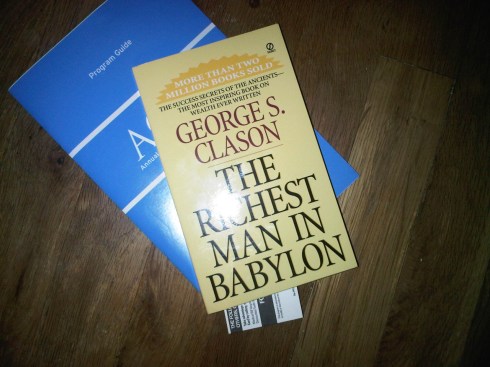
What I’m reading now. The Richest Man in. Babylon.

Must see site

26 Jul

EarlyRetirementExtreme.com.

Can u retire on 10 grand a year?
Are you committed to having less but not working for the rest of your life?
If so check the site or buy the book:
Early Retirement Extreme.
Jacob Lund Fisker, is the authors and claims he lives on about $10,000 a year and retired by 33.

Design a site like this with WordPress.com
Get started